
Machining Factory
Grinding is the process that reaches the tightest tolerance, because it removes material in tiny increments rather than cutting it away. Surface, centerless, and cylindrical grinding cover flat, round, and diameter-critical surfaces, holding ±0.002 mm where turning and milling stop at ±0.003 mm (milling) / ±0.002 mm (turning).
The routing is honest: a tolerance that needs ±0.002 mm goes to grinding, not to a mill that promises it. The process makes the tolerance true.
Grinding also brings the finish with the size. A bearing seat that is ground to ±0.002 mm comes off the wheel with a fine surface at the same time, because the wheel cuts and smooths in one pass. That pairing of size and finish is why the grinders are the last process before measurement on roundness-critical parts.
Which Certificates Bind the Factory's System?
The factory holds three certificates with verifiable numbers: ISO 9001:2015 (116024/A/0001/UK/En), IATF 16949:2016 (131941/A/0001/SM/En), and ISO 14001:2015 (116024/B/0001/UK/En). The IATF 16949 scope excludes product design under Clause 8.3 — the factory is build-to-print.
The three certificates work as one chain. ISO 9001 holds the system together — process control, traceability, corrective action. IATF 16949 raises the bar on the automotive line with stricter controls on process and supplier management. ISO 14001 keeps the environmental side documented, from waste handling to resource use. Together they describe a floor where a tolerance is not just machined but managed, and where the management is audited rather than asserted.
For you, the certificates are a shortcut through a long audit. A floor that holds all three has already been through an outside audit that checked its processes, its traceability, and its records. The buyer still asks for the numbers and the scope, but the certificates mean the system has been looked at, not just described.
Where Is the Factory, and Who Is Behind It?
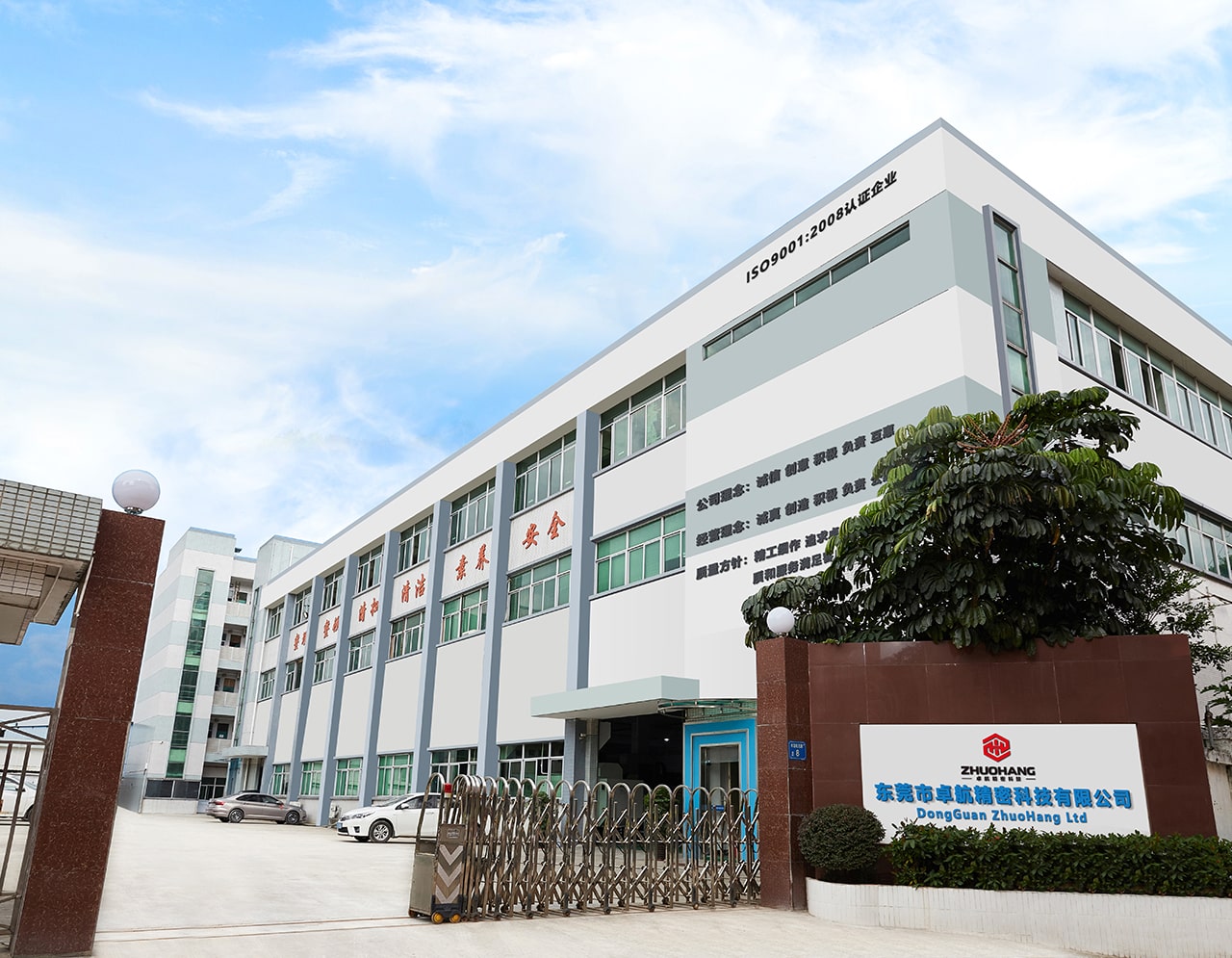
The factory operates under the legal name Dongguan Zhuohang Ltd, trading as Zhuohang Precision Machining Factory, with registration number 91441900MA4UWT6X39. Founded in 2005, it is located at:
No. 8, Shuibian Songyuan Road, Hengli Town, Dongguan City, Guangdong Province, China 523470.
Visits and audits are welcome — the address, machine list, and certificate numbers can be confirmed before you travel.
Hengli Town sits inside the Dongguan manufacturing belt, where material supply, heat treatment, and surface finishing are all a short distance from the floor. That density shortens the supply chain for raw stock and secondary processes, and it means the factory is not an island — the parts it cannot finish in-house, such as heat treatment and plating, go to qualified partners in the same region and come back scoped into the same order.
What Should a Factory Audit Ask About the Machines?
An audit is where a tolerance claim meets its equipment. Five questions do the work.
- Can I see the machine that will cut my part? A named floor is checkable; a gestured-at one is not.
- Which machine holds my tightest feature? ±0.003 mm (milling) / ±0.002 mm (turning) belongs to a turning or milling center; ±0.002 mm belongs to a grinder.
- Where is the CMM, and can I see a live report? The measurement should live on the same floor as the machines.
- What is the machine mix by role? Turning, milling, mill-turn, Swiss-type, and grinding should each be present, matched to the tolerance they hold.
- Are the certificates current and numbered? ISO 9001:2015, IATF 16949:2016, and ISO 14001:2015 each carry a verifiable identifier.
Why Does the Floor Run More Than One Machine Brand?
A single machine brand cannot cover every geometry and tolerance, so the floor is assembled by role rather than by brand loyalty. Each family earns its place by what it holds.
| Machine role | What it is chosen for | Contribution to tolerance |
|---|---|---|
| High-speed machining centers | Brother SPEEDIO-class spindles | Fast prismatic milling at ±0.003 mm |
| Mid-size machining centers | Mazak VCE-class frames | Rigid cuts on larger, heavier workpieces |
| Mill-turn and multi-tasking | Mazak QT-COMPACT and INTEGREX, Brother M-series | Turned and milled features from one clamp |
| Swiss-type lathes | Citizen Cincom, Star, Tsugami | Long, thin parts without deflection |
| Precision grinding | Surface, centerless, and cylindrical | ±0.002 mm on seats and roundness-critical surfaces |
The reason to mix brands is fit-for-purpose. A Swiss-type lathe holds a thin 3 mm pin straight where a general lathe would let it deflect; a Mazak frame carries a heavy housing where a high-speed drill-tap center would be wasted. The floor is a set of tools matched to the work, and the tolerance each tool holds is the reason it is there.
For you, the named mix is a checkable claim. A floor that names its machines by role is inviting an audit; a floor that gestures at "modern equipment" is not. The mix is the physical evidence that the tolerance numbers on the drawing have a machine behind them.
How Does a 6,800 m² Layout Support the Tolerance?
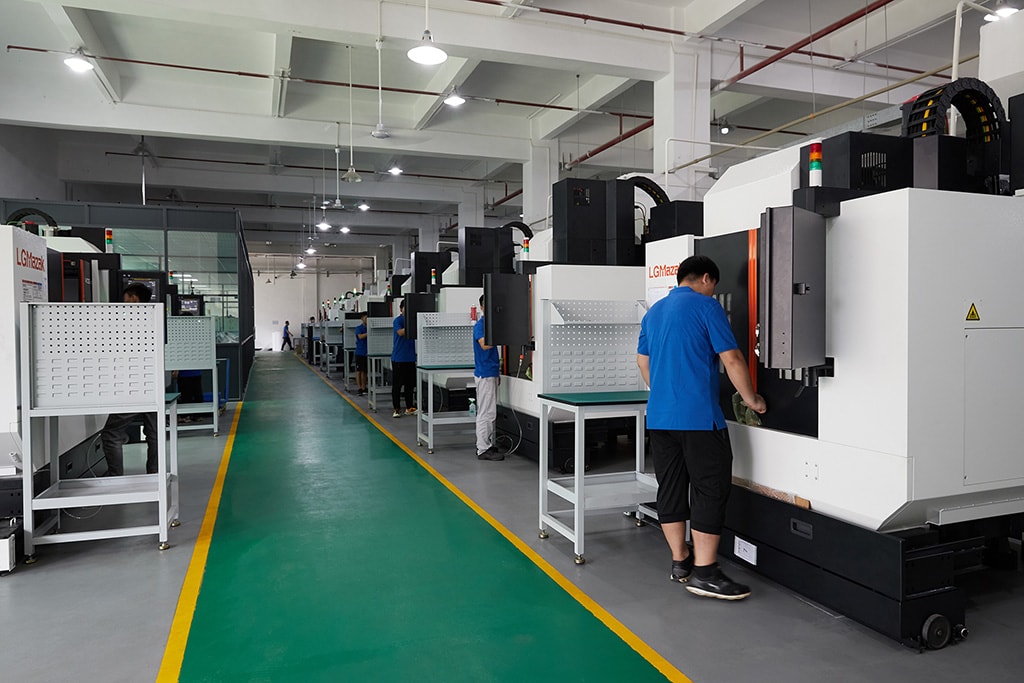
The facility covers 6,800 m² and keeps machining, grinding, and measurement under one roof. That layout is not a convenience; it is what keeps the verification loop short.
When the CMM sits on the same floor as the machines, a dimension that begins to drift is caught and corrected in minutes instead of waiting for an outside lab. The shorter the loop, the fewer parts are at risk before the offset is fixed. Inspection after the run tells you what went wrong; inspection inside the run stops it while it is happening.
The same building also keeps the material gate and the finishing gate close to the cutting. Incoming stock is XRF-checked before the first cut, and parts move to grinding or measurement without leaving the site. Every step that stays in-house removes a handoff, and every handoff is a place where a tolerance can be lost.
What Does Each Certificate Actually Cover?
Three certificates, three different jobs. Reading what each one covers tells a buyer what the system is committed to, not just that a logo is on the wall.
| Certificate | What it governs | Identifier |
|---|---|---|
| ISO 9001:2015 | The quality management system as a whole | 116024/A/0001/UK/En |
| IATF 16949:2016 | Automotive supply-chain quality, with product design excluded under Clause 8.3 | 131941/A/0001/SM/En |
| ISO 14001:2015 | The environmental management system | 116024/B/0001/UK/En |
ISO 9001 is the baseline: it means the shop runs a documented quality system with controlled processes and corrective action. IATF 16949 is the automotive layer on top, and its scope line matters — the certificate covers the manufacture of CNC metal machining parts and excludes product design under Clause 8.3, which is the honest statement that this floor is build-to-print. ISO 14001 covers the environmental side, the processes for waste and resource handling.
The identifiers are the checkable part. A certificate number can be verified against the issuing body, and if you ask for the number and look it up, you are doing exactly what the certificate is for. The number is what turns a claim into a record.
What this shop actually runs
Capability evidence should come as specifics, not slogans. Behind this guide is a 6,800 m2 plant in Dongguan, China running 100+ CNC machines with 100+ staff. The machine list by category:
- 5-axis machining centres (10+) - Mazak VARIAXIS I-600 (510/910/510 mm travel, 12,000 rpm, 22 kW, 71.6 N·m, 30-tool BT40) and Mazak INTEGREX I-250H S (B-axis 0.0001°, 24 kW, 124 N·m, 38-tool HSK-A63). Run on compound-angle parts, single-setup multi-face prismatic work, and aerospace fittings where datum transfer loss is unacceptable.
- 3-axis / 4-axis machining centres (50+) - Brother SPEEDIO S500Z2N / S700Z2N (10,000 rpm, 14/21-tool ATC, 0.7 s tool-to-tool, Z-axis 2.2 G) and Mazak VCE-430A L / VCE-570C L (10,000 rpm, 118 N·m, 24-tool ATC). Run on prismatic parts, plates, brackets, housings.
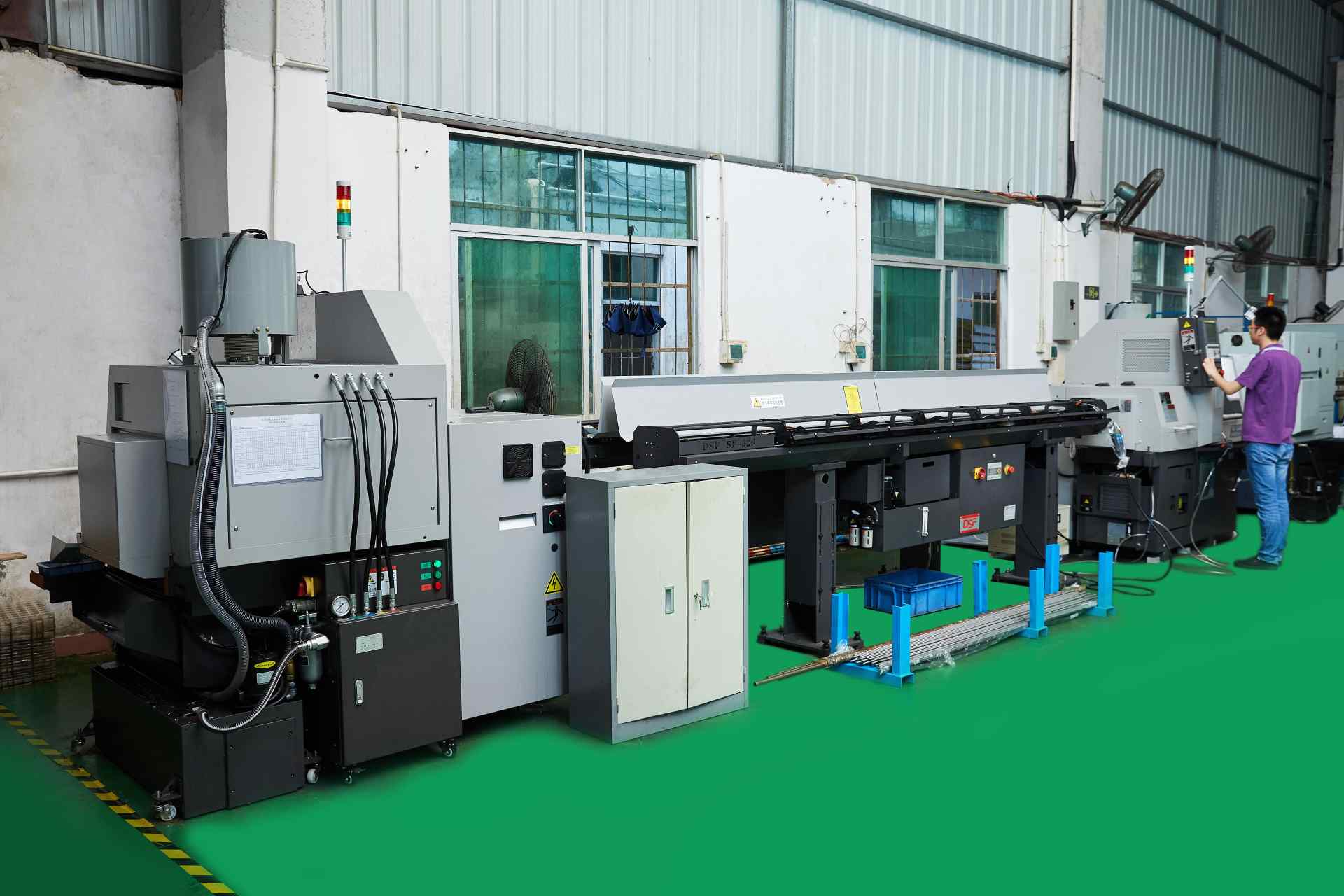
- Swiss-type turning centres (10+) - Citizen Cincom A20-3F7 (Φ20 mm, 10,000 rpm), TSUGAMI B0206-III / B0205-III (Φ20 mm, 0.1 µm), STAR SR-32JII / SR-32J Type N (Φ32 mm, 8,000 rpm). Run on long, slender rotational parts at ±0.002 mm.
- CNC turning centres (20+) - HEADMAN T70M/1250 (720 mm swing, 117 mm bore, 3,000 rpm, BMT75 12-station turret). Run on shafts, bushings, flanges up to ±0.002 mm.
- Wire EDM (5+) - Sodick AQ535L (550/350/300 mm travel, ±20° taper, 800 kg workpiece). Run on hardened tool steel, internal splines, sharp internal corners that milling cannot reach.
- Inspection: Hexagon CMM + 20+ gauges - Hexagon CMM for coordinate measurement, plus vision system, profilometer, hardness tester, coating thickness gauge, XRF for material verification. The 10:1 rule (gauge 10x more accurate than the band) is applied to every feature.
- Machine highlights - VARIAXIS I-600: one-setup multi-face 5-axis + MAZA-CHECK auto-calibration; INTEGREX I-250H S: DONE-IN-ONE mill-turn, B-axis 0.0001° + Ai thermal shield; SPEEDIO S500Z2N / S700Z2N: Z-axis 2.2 G + 0.7 s ATC; Swiss-type: guide-bush switchable + 0.1 µm resolution.
Tolerance: ±0.003 mm CNC milling / ±0.002 mm CNC turning / ±0.002 mm grinding and wire EDM. Capability: Ppk >= 1.67 initial on key characteristics, Cpk >= 1.33 ongoing.
Certificates: ISO 9001:2015 (116024/A/0001/UK/En), IATF 16949:2016 (131941/A/0001/SM/En, with design clause 8.3 excluded, stated openly) and ISO 14001:2015 (116024/B/0001/UK/En), issued to Dongguan Zhuohang Ltd, registration 91441900MA4UWT6X39, founded 2005.
Where we ship: Austria, Belgium, the Czech Republic, Denmark, France, Germany, Greece, Hungary, Ireland, Italy, the Netherlands, Spain, Sweden and the United Kingdom in Europe; Brazil, Canada, Mexico and the United States in the Americas; China, Israel, Japan, Singapore and Sri Lanka in Asia; Australia and New Zealand in Oceania; and South Africa in Africa — plus other countries and regions worldwide, shipped from our base in Dongguan, China.
Contact: Felipe Iglesias, [email protected], +86 13126536955.
See the equipment behind the tolerance
Arrange a visit or send a drawing to [email protected] or call +86 13126536955.
Frequently Asked Questions
Where is the factory located?
In short, At No. 8, Shuibian Songyuan Road, Hengli Town, Dongguan City, Guangdong Province, China 523470.
How large is the factory and how many machines does it run?
The facility covers 6,800 m² and runs 100+ production machines with more than 100 employees. The machine mix spans turning, milling, mill-turn, and grinding, matched to the tolerance each process can hold.
Which machine brands are on the floor?
Mazak, Brother, Citizen, Star, and Tsugami. The mix covers high-speed machining centers, mill-turn and multi-tasking centers, and Swiss-type lathes, matched to the part's geometry and tolerance.
How does the factory verify tolerances in-house?
Hexagon GLOBAL S CMMs verify size and geometric tolerance, and precision grinding holds ±0.002 mm, all in the same building as the machines. The verification loop is short, so a drifting dimension is corrected in minutes.
Is the factory certified?
It holds ISO 9001:2015, IATF 16949:2016, and ISO 14001:2015. The IATF 16949 scope covers the manufacture of CNC metal machining parts and excludes product design under Clause 8.3.
Can I visit the factory?
Yes, factory visits and audits are welcome. Contact [email protected] to arrange a time, and the address, machine list, and certificate numbers can be confirmed before you travel.
How does the machine mix shorten the measurement loop?
In short, Because machining, grinding, and the CMM all sit in the same 6,800 m² building. A dimension that drifts is measured and corrected in minutes on the same floor that cut it, instead of waiting on an outside lab.
What does the IATF 16949 scope exclude?
Product design under Clause 8.3. The certificate covers the manufacture of CNC metal machining parts, which means the floor is build-to-print: it makes parts to the customer's drawing and does not claim design authority over them.
Continue reading: Machining Factory · Machining Factory's Services · How to contact Machining Factory?
Standards referenced on this page
- ASTM A582/A582M-12 — Standard Specification for Free-Machining Stainless Steel Bars
- ISO 14001 — Environmental management systems — Requirements with guidance for use
- IATF 16949:2016 — Automotive quality management system standard